Generative AI vs Predictive AI Tutorial
Generative AI and Predictive AI are two terms that come up constantly in discussions about artificial intelligence, and even though they sound like they should be closely related, they describe two quite different things. Being clear on the distinction matters, both for the exam and for understanding what a given AI tool is actually doing.
Generative AI
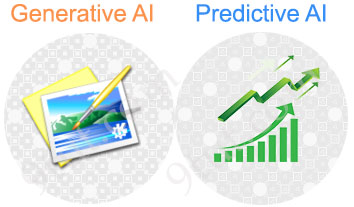
Generative AI is focused on creating new content — images, text, music, and more — by learning the underlying patterns in a large set of training data and then using those patterns to produce something original. Its applications center on content creation: writing, art generation, and image synthesis are all typical use cases. Two well-known examples are ChatGPT, which can write essays and articles, and Midjourney, which generates images from a text description.

Predictive AI
Predictive AI, in contrast, is built to forecast future events or trends by analyzing historical data and identifying patterns within it. Rather than generating something new, it estimates what is likely to happen next based on what has happened before. Common applications include predicting stock prices in finance, predicting the likelihood of disease in healthcare, analyzing customer behavior in marketing, and forecasting demand in supply chain management.
Generative AI vs. Predictive AI
| Parameter | Generative AI | Predictive AI |
|---|---|---|
| Objective | Creates original content | Predicts outcomes or analyzes patterns |
| Examples | Text, image, and video generation | Forecasting, classification |
| Learning | Identifies patterns and relationships in data to generate something new | Uses historical data to make predictions about future outcomes |
| Use Cases | Creative and content-generation tasks | Business analytics and financial forecasting |
| Creativity | Produces genuinely novel content | Does not involve a creative element |
| Algorithms | Complex deep learning methods | Statistical and machine learning analysis |